
Weekly edition · · Story 2 of 5
Measurement
Epoch AI says the price of a given level of AI performance is falling fast
Epoch AI estimates that since 2023 the cost of reaching a given level of AI performance has fallen about 47 percent per quarter. The figures are Epoch's own estimates.
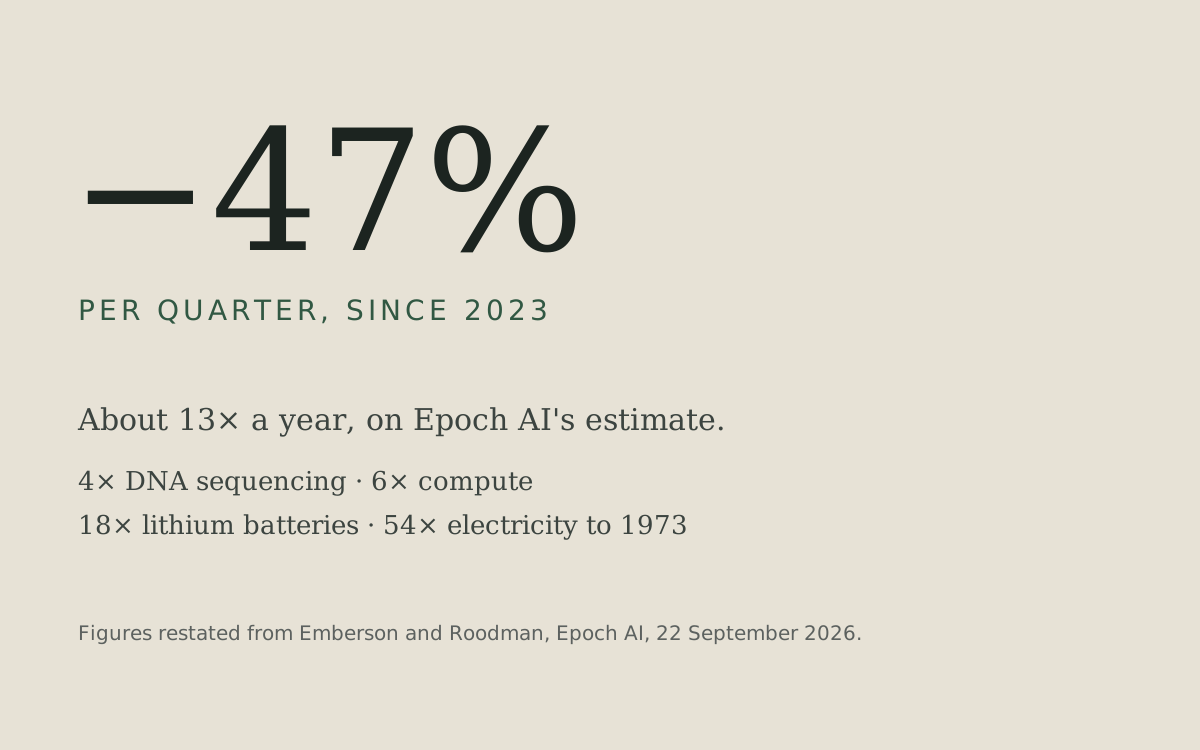
On 22 September 2026 Epoch AI published “The plunging price of thought” by Luke Emberson and David Roodman. Epoch estimates that, since 2023, the cost of reaching a given level of AI performance has fallen about 47 percent per quarter, or 13 times per year.
Epoch says that is faster than the historical price drops it compared: four times faster than DNA sequencing, six times faster than compute, 18 times faster than lithium batteries and, from 1892 to 1973, 54 times faster than electricity.
The estimate rests on five benchmarks covering mathematics, science and games of skill, and the pace differs between them. Epoch says the drop is slower on game-based puzzles, at about 39 to 43 percent per quarter, and faster on maths problems, at about 50 to 52 percent per quarter.
Averaged across the five primary benchmarks, Epoch says the cost of performance that has just become state of the art falls about 66 percent per quarter. Two years later, it says, the cost of that same level falls about 32 percent per quarter.
Epoch adds that coarser evidence makes it plausible that the price of a given performance level has been falling at least this fast since commercial LLM inference began with the full GPT-3 release in November 2021.
These are Epoch's estimates from its own price-and-benchmark data. They are not a quoted market price, and they were not independently repeated this week. Epoch releases the work under Creative Commons Attribution 4.0, with credit to the authors.
Correction, 2 October 2026: an earlier version of this story described Epoch's electricity comparison as covering “the century up to 1973”; Epoch's period is 1892 to 1973.
Sources
- Primary Epoch AI, 22 September 2026
- Discovery Epoch AI on X
Spotted a mistake, or want to complain about this story? Email support@theamateur.co.uk. We correct mistakes and note the change on the story. How we handle corrections
How this edition was made
We found these stories through posts on X, then checked each claim against primary sources, such as company announcements, research papers and official statements. Company figures are reported as the company's own. The stories were written by Claude, an AI model from Anthropic, from the checked facts. Each image is credited beneath it. How we make AI Journalism · This edition's data
AI Journalism is written by AI models from checked sources and published by The Amateur Limited. How we make it